Date Published: 02/03/2026
Spanish tax returns 2026: The deductions you've lost after Congress axed the social shield
From home energy improvements to self-employment tax rules, here's what's changed and what it means for your wallet
The
Spanish Congress recently voted against Royal Decree-Law 2/2026, a piece of legislation that had been covering a range of social and economic protections, including
a freeze on certain evictions.
But buried within that same decree were
several important income tax deductions and its rejection means some of those are now gone. Here's a straightforward breakdown of what's changed and what it means for you.
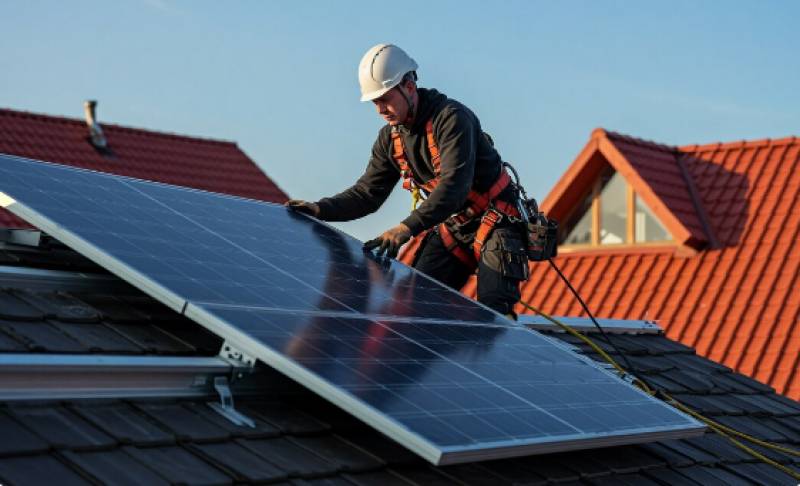
Home energy improvement deductions
The first of the two lost deductions allowed homeowners to claim back 40% of costs, up to a maximum of €7,500, for renovation work on a main home that either reduced non-renewable primary energy consumption by at least 30% or brought the property's energy rating up to an A or B.
That deduction now only applies to work carried out between October 6, 2021 and December 31, 2024, so anything done from 2025 onwards can no longer be claimed.
The second deduction that's being lost allowed people to claim 60% of costs, up to €5,000, for works that achieved similar energy improvements but applied to whole buildings rather than just individual homes. This one can still be claimed for the 2025 tax return, but it will not be available for the 2027 return onwards.
It's also worth knowing that if your eligible costs exceed that €5,000 annual limit, the remainder can be carried forward over the next four tax years, as long as the total claimed doesn't go above €15,000.
Electric vehicles and home charging points
If you bought an electric car or had a home charging point installed in 2025,
you can still claim the 15% deduction on this year's tax return, with a maximum base of €20,000. However, anyone planning to do either of those things in 2026 will no longer be able to claim anything on their 2027 return, because the decree that would have extended that deduction through to the end of 2026 has now been scrapped.
Changes for the self-employed
Small business owners and self-employed people who pay tax under the simplified "módulos" system will also feel the impact. The rejected decree had included an extension of the income and purchase thresholds that allow people to use this simplified approach to taxation, which keeps paperwork lighter and payments more predictable.
Without that extension, those thresholds will now drop back to lower levels, meaning some self-employed people may find themselves forced to switch to a different tax method without much time to prepare.
Property owners with unoccupied homes
If you own a property in Spain that isn't your main home and isn't being rented out, this one affects you too. The rejected decree had kept the imputed income tax rate at 1.1% for properties whose cadastral values were revised after January 1, 2012. With the decree gone, that rate reverts to 2%, which means a higher tax bill for affected owners.
One last thing to bear in mind
Whatever deductions you do or don't claim, it's worth knowing that Spain's Tax Agency has up to four years to review income tax returns. That means they have until 2029 to look back at 2025 returns and flag any deductions that were claimed incorrectly.
If in doubt, it's always worth getting advice from a qualified tax professional before you file.
Image: Freepik
article_detail

|