Guidelines for submitting articles to Roda Golf Resort Today
Hello, and thank you for choosing La Torre Today.com to publicise your organisation’s info or event.
Roda Golf Resort Today is a website set up by Murcia Today specifically for residents of the urbanisation in Southwest Murcia, providing news and information on what’s happening in the local area, which is the largest English-speaking expat area in the Region of Murcia.
When submitting text to be included on Roda Golf Resort Today, please abide by the following guidelines so we can upload your article as swiftly as possible:
Send an email to editor@spaintodayonline.com or contact@murciatoday.com
Attach the information in a Word Document or Google Doc
Include all relevant points, including:
Who is the organisation running the event?
Where is it happening?
When?
How much does it cost?
Is it necessary to book beforehand, or can people just show up on the day?
…but try not to exceed 300 words
Also attach a photo to illustrate your article, no more than 100kb
PROPERTY SEARCH
article_detail
Date Published: 27/02/2026
Full Gibraltar treaty published as Spain takes key Schengen role
The draft text confirms sovereignty safeguards, the removal of the border fence and new rules on border control, airport management and cross-border workers
The long-awaited draft Treaty on Gibraltar was published on Thursday February 26, setting out in detail how the Rock’s relationship with the European Union will work after Brexit. The text now moves to the various parliaments for ratification before it can enter into force.
After the UK left the EU, Gibraltar was excluded from the UK-EU Trade and Cooperation Agreement, leaving uncertainty over border arrangements and daily cross-border movement. The new draft treaty is presented by the UK Government as “a historic treaty that guarantees a secure, stable, and lasting relationship between the EU and Gibraltar”, with the support of Gibraltar and Spain.
Crucially for British readers, the text states that “no provision of the Agreement or of any supplementary agreement shall affect sovereignty”. The UK reiterates what it calls its “double lock”, insisting it will never agree to Gibraltar coming under another state’s sovereignty against the will of its people.
Spain to oversee Schengen border controls
One of the most significant changes is that Spain will assume responsibility for Schengen border controls at Gibraltar’s port and airport. While physical barriers at the land border are to be removed, legal controls will remain in place under EU rules.
Spain will be able to object to Gibraltar residence permits on grounds of public order, internal security or public health. If Spain raises an objection within 28 days, the UK must not issue or renew the permit. Spain can also request the withdrawal of an existing permit if security concerns arise.
In asylum cases, Spain must be informed and may object within 14 days.
European Trade Commissioner Maros Sefcovic said the objective was to “guarantee the long-term prosperity of the region, while fully safeguarding Schengen, the EU single market, and our customs union”, noting that 15,000 people cross the border daily.
Fence removal and customs union
The treaty provides for the definitive removal of the border fence, described by Spanish Foreign Minister José Manuel Albares as “eliminating the last wall on the European continent”. However, customs controls are not disappearing. Instead, Gibraltar will enter into a specific customs union with the EU.
Spain will oversee checks at designated customs posts in Algeciras, La Línea and Sagunto to protect the single market. The agreement includes strict measures on taxation and tobacco to prevent smuggling and unfair competition.
For example:
The total excise duty on cigarettes must not fall below €115 per 1,000 units
The price difference per pack compared with Spain cannot exceed €0.80 or 15%
Gibraltar must implement an EU-equivalent tobacco traceability system
An independent body, with Spanish participation, will assess whether Gibraltar’s taxes create economic distortions.
What it means for the airport
For the first time, the treaty creates a specific legal framework for Gibraltar airport. A joint venture between Gibraltar and Spain will manage operations in line with EU aviation, border and security rules.
The text makes clear that these arrangements do not affect the legal positions of either Spain or the UK on sovereignty. Border controls will take place at the airport under Schengen rules, opening the door to flights between Gibraltar and EU destinations, provided all requirements are met.
Protection for cross-border workers
The agreement also guarantees the rights of cross-border workers, many of whom live in Spain and work in Gibraltar.
It safeguards:
Continued employment without discrimination
Coordination of Social Security contributions without duplication
Recognition of pension and benefit entitlements
Access to healthcare
With the physical fence removed, daily checks for these workers are not envisaged, except in exceptional security circumstances. For the Campo de Gibraltar, this offers legal certainty to thousands of families.
Calls for clearer guidance
Not everyone is fully reassured. The regional leadership of CCOO in Campo de Gibraltar has called for a government advisory body to support workers and businesses during implementation, warning of a lack of official information and a potentially short transition period.
Union representative Manuel Triano described the treaty as “a major shift for the socio-economic reality of the Campo de Gibraltar” and said the region must move into this new phase “without major setbacks.”
The draft text is now undergoing legal review and translation before being submitted for parliamentary approval. Until ratification is completed in the UK and the EU, the new arrangements will not take effect. Officials, from both sides, say they are working to ensure the treaty enters into force as soon as possible, aiming to provide long-awaited certainty on either side of the border.
For now, the publication of the full draft offers the clearest picture yet of how Gibraltar’s post-Brexit relationship with the EU could look, but the final decision rests with lawmakers.














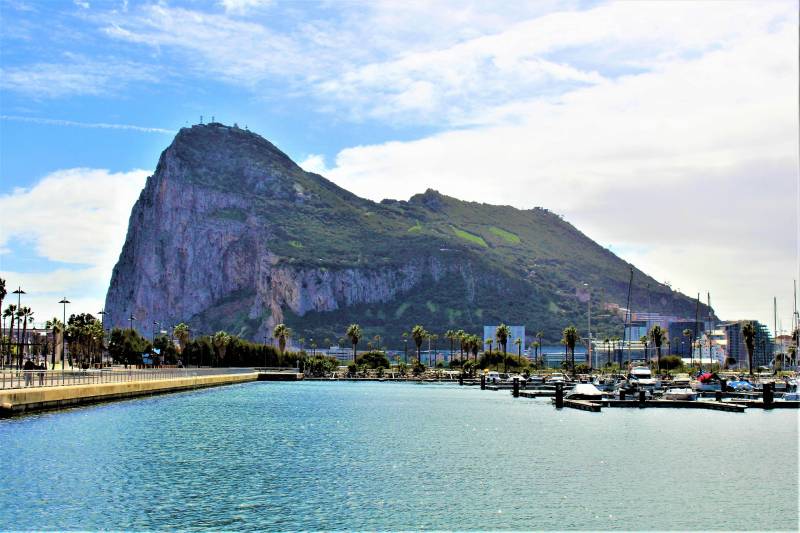 The long-awaited draft Treaty on Gibraltar was published on Thursday February 26, setting out in detail how the Rock’s relationship with the European Union will work after Brexit. The text now moves to the various parliaments for ratification before it can enter into force.