Guidelines for submitting articles to Roda Golf Resort Today
Hello, and thank you for choosing La Torre Today.com to publicise your organisation’s info or event.
Roda Golf Resort Today is a website set up by Murcia Today specifically for residents of the urbanisation in Southwest Murcia, providing news and information on what’s happening in the local area, which is the largest English-speaking expat area in the Region of Murcia.
When submitting text to be included on Roda Golf Resort Today, please abide by the following guidelines so we can upload your article as swiftly as possible:
Send an email to editor@spaintodayonline.com or contact@murciatoday.com
Attach the information in a Word Document or Google Doc
Include all relevant points, including:
Who is the organisation running the event?
Where is it happening?
When?
How much does it cost?
Is it necessary to book beforehand, or can people just show up on the day?
…but try not to exceed 300 words
Also attach a photo to illustrate your article, no more than 100kb
PROPERTY SEARCH
article_detail
Date Published: 28/04/2026
Doctors' strike returns across Spain with cancelled appointments and falling turnout
Fresh wave of industrial action highlights ongoing dispute as patients face further disruption
Thousands of appointments have once again been cancelled across Spain as doctors began a new round of strike action on Monday April 27, in an ongoing dispute with the government over working conditions and a proposed new Framework Statute.
The latest stoppage marks the third strike of the year and follows months of escalating tensions between medical unions and the Ministry of Health. The rolling programme of strikes, which began earlier this year and is set to continue through to June, has already caused widespread disruption to healthcare services across the country. Despite nearly 30 meetings, both sides remain far apart, with unions now calling for the resignation of Health Minister Mónica García.
Participation figures once again vary sharply. Regional health authorities estimate turnout at around 20%, while unions claim as many as 80% of doctors took part. Even so, the figures suggest a slight drop compared to the first major strike in February.
In the Region of Murcia, the impact was immediately visible. A total of 4,610 appointments were cancelled or postponed on the first day alone, including 1,623 specialist consultations, 2,490 primary care appointments, 406 diagnostic tests and 91 surgeries, representing 29% of scheduled operations. Patients arriving for scheduled consultations were often left frustrated. “Nothing, I’m leaving again without being seen,” said María, who had travelled from Alhama for a hospital appointment. “It’s the second time this has happened… I just hope it will be worth it for them.”
Others reported confusion, with some turning up unaware their appointments had been affected. “Many are leaving without being seen because they haven’t even been notified not to come,” one patient explained. Health centres and clinics were running at reduced capacity, although some patients were still seen as normal, particularly in Primary Care. More than 6,000 doctors in the region have been called to strike this week, with a demonstration planned in Murcia city on Wednesday April 29.
In the Valencian Community, participation has been lower overall, though Alicante recorded the highest turnout in the region at 11.75%, more than double that of Valencia at 5.75% and Castellón at 4.54%, bringing the regional average to 7.43%. Doctors there continue to push for structural changes, including a dedicated Medical Statute, a specific negotiating framework separate from other healthcare staff, and a fair professional reclassification that reflects their level of training and responsibility. They are also calling for a 35-hour working week, proper compensation for additional hours and a more flexible retirement model.
Meanwhile in Andalucía, the scale of disruption continues to build. The Andalusian Health Service estimates that 19.31% of doctors joined Monday’s strike, with figures varying across provinces, including over 24% in Almería and Huelva and around 21% in Seville. The region has already seen more than 767,000 healthcare procedures affected since the industrial action began, with an economic impact exceeding €111 million. During the March strike alone, more than 256,000 healthcare services were lost, including over 150,000 appointments in Primary Care.
Union representatives remain firm in their demands, calling for improved working conditions, recognition of the risks of the profession, clearer regulation of on-call shifts and the creation of a dedicated negotiating table. “We cannot continue working under the current conditions,” said Rafael Ojeda of the Andalusian Medical Union, warning that without changes, the conflict will continue.
Across the rest of Spain, participation has varied widely. Catalonia reported just over 5%, while regions such as Galicia and Cantabria saw much higher union estimates. In Madrid, the strike has already affected around 500,000 residents.
Despite the disruption, some patients remain sympathetic. As María from Murcia put it, “We know they’re fighting to improve their conditions… they have every right to do so.”
For now, with further strike dates already scheduled for May and June, the pressure on Spain’s healthcare system looks set to continue.



















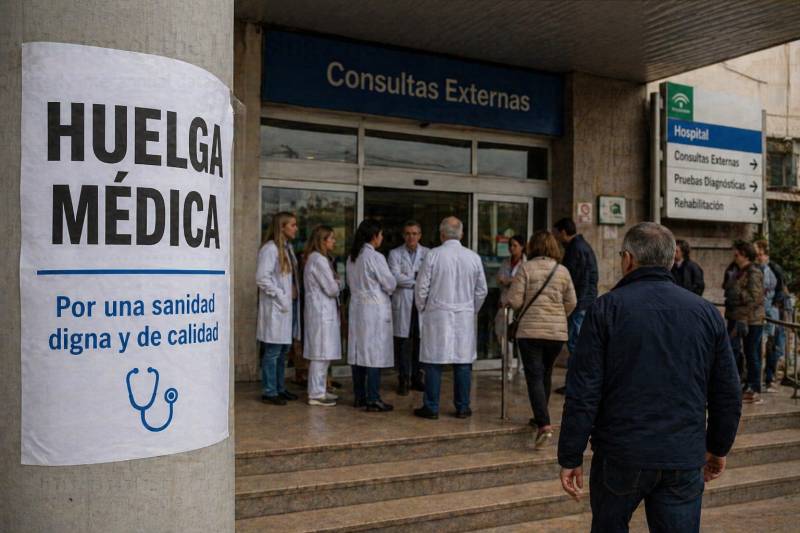 Thousands of appointments have once again been cancelled across Spain as doctors began a new round of strike action on Monday April 27, in an ongoing dispute with the government over working conditions and a proposed new Framework Statute.