Guidelines for submitting articles to Roda Golf Resort Today
Hello, and thank you for choosing La Torre Today.com to publicise your organisation’s info or event.
Roda Golf Resort Today is a website set up by Murcia Today specifically for residents of the urbanisation in Southwest Murcia, providing news and information on what’s happening in the local area, which is the largest English-speaking expat area in the Region of Murcia.
When submitting text to be included on Roda Golf Resort Today, please abide by the following guidelines so we can upload your article as swiftly as possible:
Send an email to editor@spaintodayonline.com or contact@murciatoday.com
Attach the information in a Word Document or Google Doc
Include all relevant points, including:
Who is the organisation running the event?
Where is it happening?
When?
How much does it cost?
Is it necessary to book beforehand, or can people just show up on the day?
…but try not to exceed 300 words
Also attach a photo to illustrate your article, no more than 100kb
PROPERTY SEARCH
PROPERTY SEARCH
article_detail
Date Published: 09/06/2026
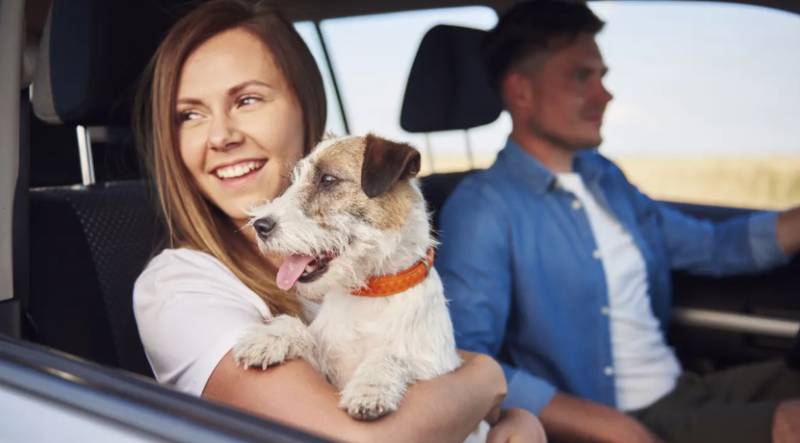
Can your dog travel in the front seat in Spain? Here's what the law actually says
The rules around travelling with dogs in cars in Spain are more complicated than you might think
If you regularly travel with your dog in the car, it's worth knowing exactly where Spain's traffic regulations stand on the subject, because the rules are a little more nuanced than most people realise.
The first surprise is that Spanish law doesn't actually contain an outright ban on dogs travelling in the front seat. What Article 18.1 of the General Traffic Regulations does require is that drivers maintain full freedom of movement, an unobstructed field of vision and constant attention to the road, and that any objects or animals in the vehicle are positioned so they can't interfere with driving.
In other words, the law focuses on safety rather than location. A dog could technically travel in the front seat if it's properly restrained and causes no distraction, but a traffic officer who judges otherwise can still issue a fine, and the Spanish Directorate General of Traffic (DGT) strongly advises against it.
The potential penalties range from around €100 for a dog travelling completely loose in the car, up to €200 if the animal is clearly interfering with driving, for example sitting on the driver's lap or moving freely between the seats. In situations considered especially dangerous, fines can reach €500 and cost the driver up to six points on their licence.
Beyond the legal risk, there's a compelling physical argument for keeping dogs out of the front. Airbags deploy at enormous speed and force, and are designed for adults. For a small or medium-sized dog, the impact can be fatal. Then there's the projectile problem. The DGT points out that in a moderate collision, a five-kilogram dog can strike with a force equivalent to 280 kilograms. A larger dog multiplies that figure considerably, posing a serious risk to everyone in the vehicle including rescue teams.
Spanish law doesn't specify a particular type of restraint system, only that the animal must be secured in a way that doesn't compromise safety. That's led to a wide market of options including harnesses, carriers, divider grilles, booster seats and combinations of several systems. The DGT considers two-point harnesses significantly safer than single-point ones, and warns strongly against restraining a dog by its collar alone. In a sudden stop, concentrating all that force on the neck and trachea dramatically increases the risk of serious injury.
Dog booster seats and car seats are legal, but their safety varies considerably. Many are designed primarily to limit minor movements rather than withstand a serious collision, so it's worth checking whether any product you buy has been through independent crash testing. Legality and safety are not the same thing.
For smaller dogs, a carrier placed on the floor behind the front seats or secured to a rear seat is considered one of the safest options. For larger dogs, a carrier positioned crosswise in the boot combined with a divider grille tends to perform best in crash tests.
The goal in either case is to limit the animal's movement in an accident, not simply to keep it out of the front.