









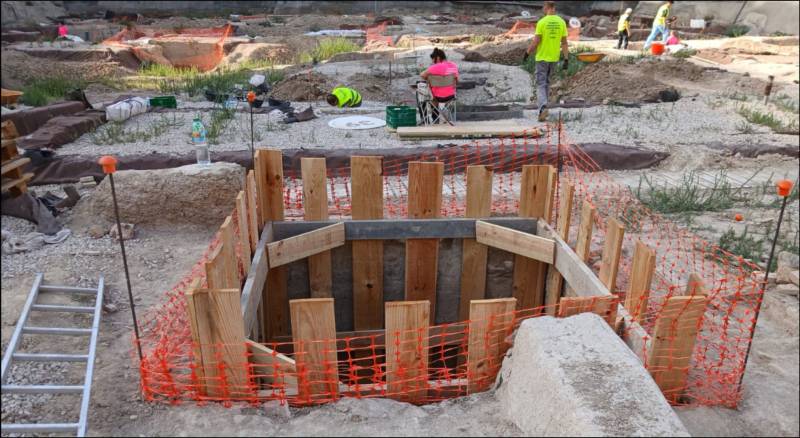







Archaeologists working at Murcia's San Esteban site have uncovered more evidence of what life was like in La Arrixaca, the medieval Islamic neighbourhood that occupied this part of the city more than 800 years ago.
The latest discoveries include a well-preserved latrine, the remains of a mare and large brick pillars that suggest one of the buildings may once have had two or even three storeys.
The finds have been made during ongoing excavations around the Jardín de San Esteban, where archaeologists continue to uncover more of the former Arrabal of La Arrixaca, one of the most important Islamic suburbs of medieval Spain.
 One of the most unusual finds is a medieval latrine, uncovered in an area known as Trench 27. Murcia Ayuntamiento says it has been carefully lifted out in one piece so it can be restored before being returned to its original location once work on the site is complete.
The restoration will help preserve the structure while allowing future visitors to see it where it was originally discovered.
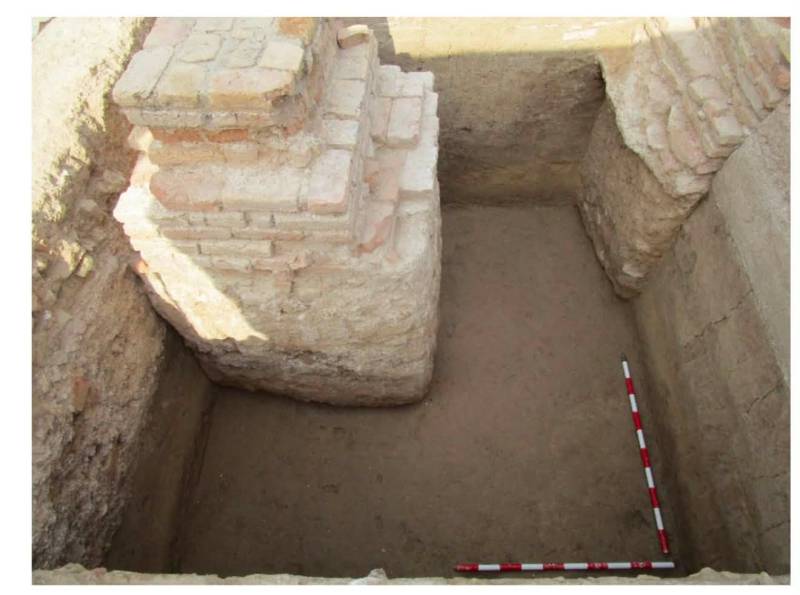
Elsewhere on the site, archaeologists have uncovered large solid brick pillars in an area known as Enclosure II. The discovery has strengthened the theory that one of the buildings may have had two, or even three, storeys more than 800 years ago.
Murcia mayor Rebeca Pérez shared the latest update on social media, saying the excavation continues to provide new information about the city's past.
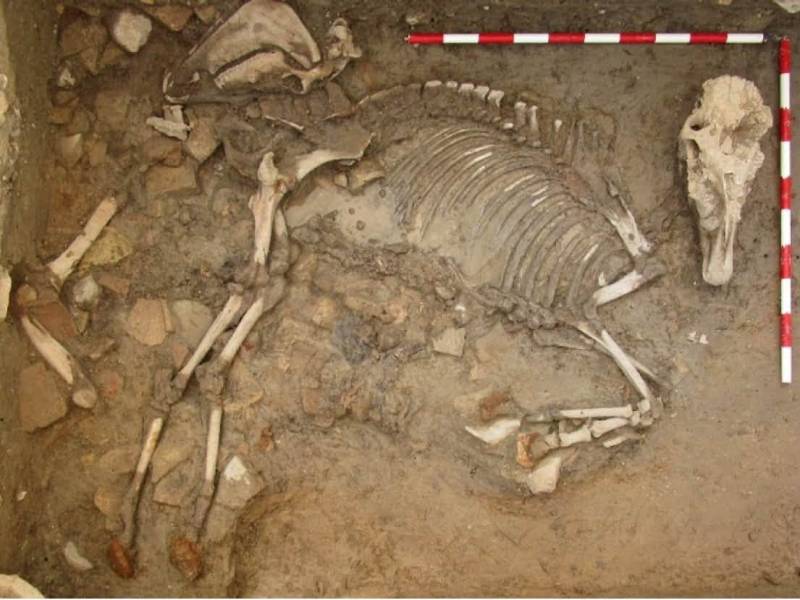 The remains of a mare have also been uncovered and carefully exhumed during the excavation. Experts believe the find could help them learn more about how animals were used and the role they played in everyday life in La Arrixaca.
Sharing the update, Pérez said work to protect and preserve the site would continue while the Ayuntamiento completes the tender process for the new public square above the archaeological remains and the Interpretation Centre below ground.
"While the tender process for the construction project for the large public square above ground and the Interpretation Centre below ground is being completed, we continue working to recover and showcase our heritage," she said.
The San Esteban excavations have already revealed hundreds of years of Murcia's history, and archaeologists expect more discoveries as work on the site continues. Once restored, some of the latest finds will be returned to their original locations as part of the future visitor experience.
Images: Rebeca Pérez
For dedicated Murcia City section with exhibition and cultural programmes and general tourism information, Click MURCIA CITY.
 The Tourist office in Plaza Belluga is the main tourist office for the city and is conveniently located opposite the Cathedral and close to the Glorieta underground car parking.
The tourist office is open from Monday to Saturday 10am to 7pm and Sundays from 10am to 2pm
Telephone number: 968 358 749
Click for map, Plaza Belluga Murcia
Tourist information points:
Santa Clara
Maps of the city and leaflets are also available from the Tourist Information point in Calle Santa Clara, which is just behind the Teatro Romea and close to the Plaza de Santo Domingo.
 This is open from Monday to Friday from 4.30pm to 8.30pm, on Saturdays from 10am to 2pm and 4.30pm to 8.30pm and on Sundays and Festival days from 10am to 2pm.
Click for map, Calle Santa Clara.
Information point Juan Carlos I
Avda. Juan Carlos I. In the ground level of the Pabellón Principe de Asturias.
Opening Time : From Monday to Friday, 4.30pm to 8.30pm and Saturdays 10am to 2pm
Click for map, Avenida Juan Carlos I, Murcia
Information point Jardin de Floridablanca ( from beginning of June 2014)
 Jardín de Floridablanca,
This information point is being co-operated with the commercial association representing the area and will give information in English and Spanish between the hours of 4.30pm to 8.30pm from Monday to Friday, from 10am to 2pm and 4.30pm and 8.30pm on Saturdays, then 10am to 2pm on Sundays.
Click for map, Jardín de Floridablanca, Murcia
Murcia city is the capital city of the Region of Murcia and has a wide tourism offering, both in the urban centre and in the natural parklands and fertile orchards which surround it. The city owes its existence to the River Segura which attracted the earliest settlers to the river valley, with Iberian remains at the Sanctuary of la Luz, Roman agricultural settlements at Monteagudo, La Alberca and Murtia, then the city itself founded by the Moors in 825AD.
The remains of the past can be seen in the Murcia Archaeological Museum, the Museo de la Ciudad, The Watermill Museum, the Muralla de Santa Eulalia and the Monastery of Santa Clara. As time moved on, Murcia grew into a splendid Baroque City, its magnificent Cathedral, Iglesia de San Juan de Dios and Salzillo Museum reflecting this era of splendour.
The city is rich in traditions, Semana Santa, the Bando de la Huerta, Burning of the sardine, Fiestas de la 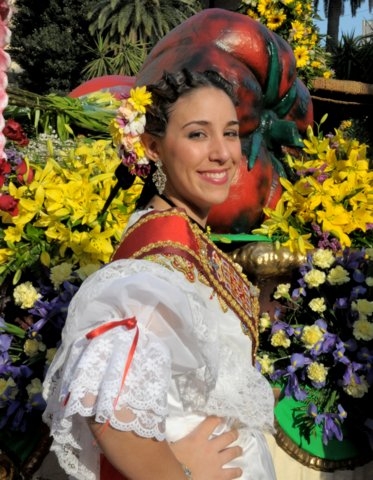 Primavera, Moors and Christians celebrations adding to the annual Jazz Festival, Folk Festival, Murcia Tres Culturas and many other musical and cultural events to be enjoyed by visitors to the city.
It also has many natural parks and public spaces, as well as the Terra Natura Wildlife park, and its pedanías a varied offering of walking and river sports activities, as well as providing a central base from which to explore the Region of Murcia.
The new International Airport of the Region of Murcia also lies within the Murcian pedanía of Corvera, and the city is well connected via rail and major road networks.
View Murcia in a larger map